@dxbdly
2021-07-11T15:18:27.000000Z
字数 16972
阅读 360
FHQ-Treap
OI-算法
图片引自博客 (怪我美术太差画不出,找到几个操作是有图的,勉强看看吧)
本文作者 ,转载或引用请加上原文链接
修润了部分 ,更新了部分代码(虽然注释没了,但应该不打紧),加入了新的例题
前言
我们在学习 时,会发现其实 的复杂度并不稳定
如果我们构造一个单调序列,那么树的形状会变成一条链,单次操作时间复杂度
那么这时候我们需要一些方法使得 树 平衡
众所周知,平衡树大多带旋转操作,并且码量巨大无比(反正我没写出来过)
今天介绍一种不需要旋转,且 非常好写,非常好写,非常好写 的平衡树 ——
的思想
说 之前,我们先来看看
,即 + 堆
他的思想是:对于 树上的每个节点,我们都 随机 给他一个权值 ,我们需要保证 满足堆的性质(大根,小根均可)
则他的期望形状是平衡的。(是不是很玄学,至于怎么证吗……请读者自证)
的思想与操作
维护的操作是通过不断旋转,码量巨大而且常数**
但 用的则是合并 与分裂 的操作。
对于一个节点,我们需要记录以下变量:
//The code is from dxbdlystruct node {int lc, rc;int siz, rad, val;}Tree[maxn << 1];
我们直接来看操作:
操作
动态开点,随机获取 值。
//The code is from dxbdlyinline int Add(int val) {tot++;Tree[tot].siz = 1, Tree[tot].lc = Tree[tot].rc = 0, Tree[tot].val = val, Tree[tot].rad = rand();return tot;}
操作
对于一节点由于其左儿子,右儿子有变化,需要重新统计
//The code is from dxbdlyinline void Update(int k) {Tree[k].siz = Tree[Tree[k].lc].siz + Tree[Tree[k].rc].siz + 1;}
操作
操作主要维护堆的性质,将两个 合成一个,具体可以参考左偏树的合并。

//The code is from dxbdlyinline void Merge(int &k, int a, int b) {if(!a || !b) { k = a + b; return ; }if(Tree[a].rad <= Tree[b].rad) k = a, Merge(Tree[k].rc, Tree[k].rc, b);else k = b, Merge(Tree[k].lc, a, Tree[k].lc);Update(k);}
操作
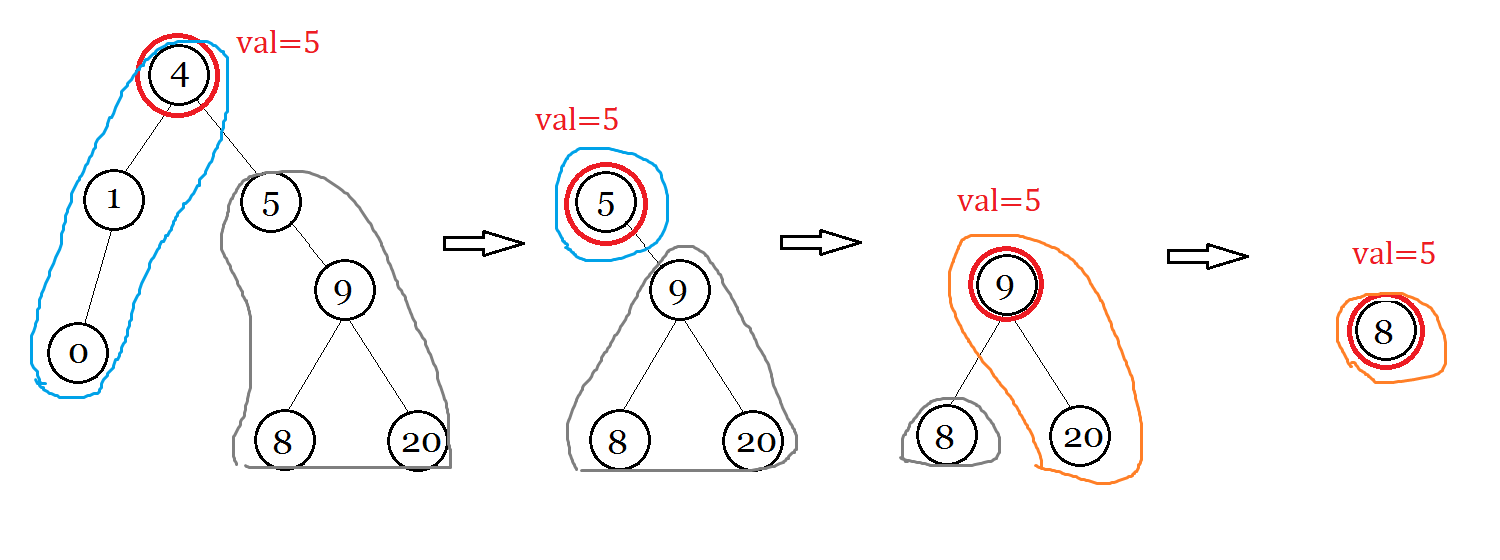
操作主要满足 性质,有两种写法:
按权值分裂:
则若分裂标准为 ,我们要使得分裂出的左树点权值均 ,右树均
分三种情况讨论:
设 当前子树根节点为 ,要分裂出的两棵子树分别为 ,分裂标准为
若
若
由 性质可知,左子树所有点均
左子树确定 我们只需要在右子树递归求 的右子树, 即可若
同理
我们只需要在左子树递归处理 的左子树。
代码:
//The code is from dxbdlyinline void Split(int k, int &a, int &b, int val) {if(!k) { a = b = 0; return ; }if(Tree[k].val <= val) a = k, Split(Tree[k].rc, Tree[k].rc, b, val);else b = k, Split(Tree[k].lc, a, Tree[k].lc, val);Update(k);}
根据 分裂:
标准量为: ,则左树 均 ,右树均
差不多的讨论方式,可以自己试着推一下。
代码:
//The code is from dxbdlyinline void Split(int k, int &a, int &b, int x) {if(!k) { a = b = 0; return ; }if(Tree[Tree[k].lc].siz + 1 <= x) a = k, Split(Tree[k].rc, Tree[k].rc, b, x - Tree[Tree[k].lc].siz - 1);else b = k, Split(Tree[k].lc, a, Tree[k].lc, x);Update(k);}
操作
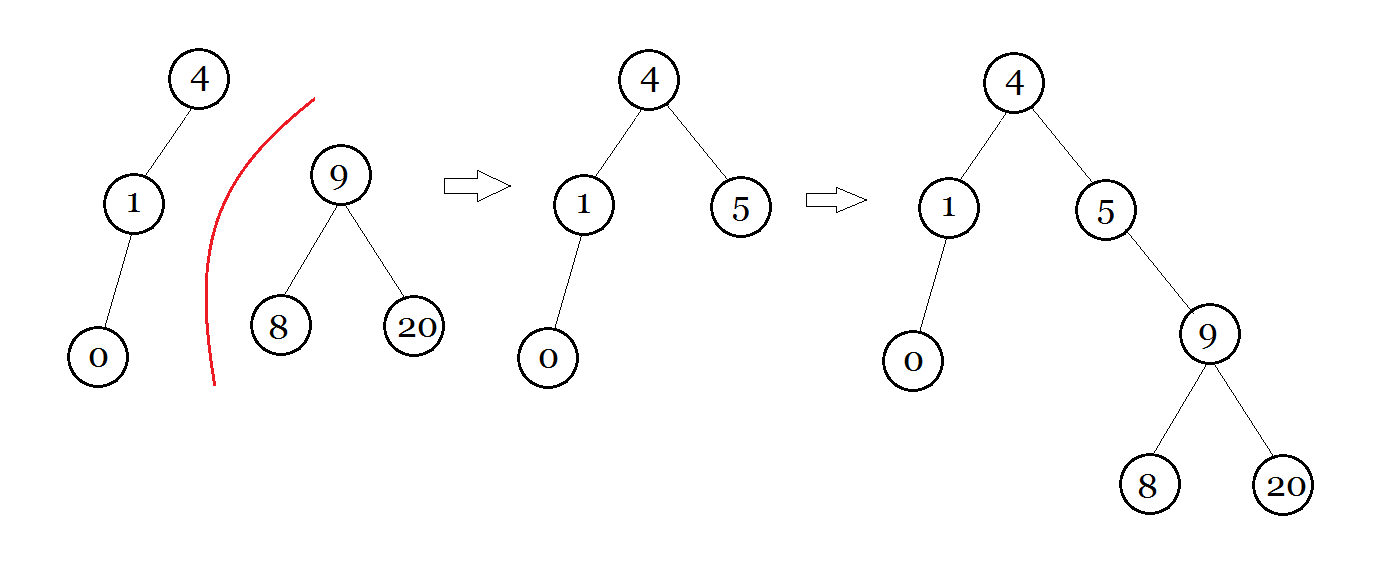
若插入的值为
则以 为标准量 整棵树,
然后
最后重新全部 。
代码:
//The code is from dxbdlyinline void Insert(int &k, int val) {int a, b, c = Add(val);Split(k, a, b, val), Merge(a, a, c), Merge(k, a, b);}
操作
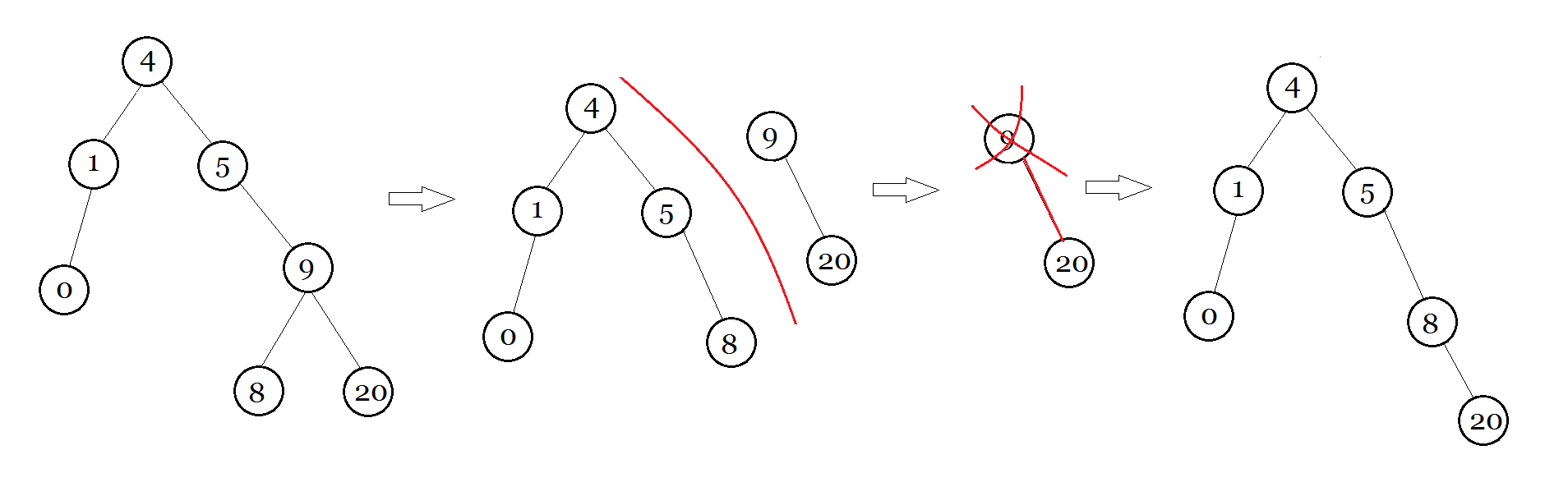
若删除的点权值为
以 为标准量将整棵树 为
再以 为标准量将 为 ,这样就可以分离出权值为 的点,它为 的根节点
将 的左右儿子 ,就可以将其删除
然后全部重新
代码:
//The code is from dxbdlyinline void Delte(int &k, int val) {int a, b, c;Split(k, a, b, val), Split(a, a, c, val - 1);Merge(c, Tree[c].lc, Tree[c].rc), Merge(a, a, c), Merge(k, a, b);}
操作
我们若想知道排名为 的数。
与主席树求第 小相似。
如果左子树 则就是当前节点。
如果左子树 则 不变,递归左子树找
如果左子树 则 变为 ,递归右子树找。
代码:
//The code is from dxbdlyinline int Find_Val(int k, int x) {while(Tree[Tree[k].lc].siz + 1 != x) {if(Tree[Tree[k].lc].siz >= x) k = Tree[k].lc;else x -= (Tree[Tree[k].lc].siz + 1), k = Tree[k].rc;}return Tree[k].val;}
操作
我们若想知道权值为 的数的排名。
只要将按 为标准量 ,此时左树节点均 ,所以左树的 就是答案。
代码:
//The code is from dxbdlyinline int Find_Rnk(int &k, int val) {int a, b, ans;Split(k, a, b, val - 1), ans = Tree[a].siz + 1, Merge(k, a, b);return ans;}
操作
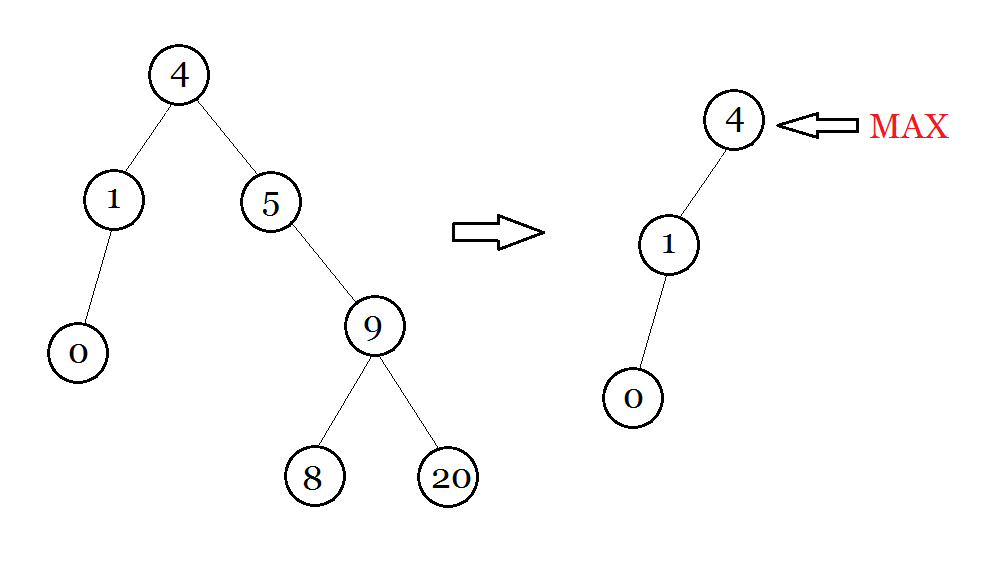
我们若想知道权值为 的前驱。
只要按 为标准量 ,此时左树的最大节点(排名第 )便是前驱。
只需在左树中 左树的第 即是答案。
代码:
//The code is from dxbdlyinline int Find_Pre(int &k, int val) {int a, b, ans;Split(k, a, b, val - 1), ans = Find_Val(a, Tree[a].siz), Merge(k, a, b);return ans;}
操作
我们若想知道权值为 的后继。
只要以 为标准量 ,此时右树的最小节点(排名为 )
只要在右树中 右树的第 即使答案
代码:
//The code is from dxbdlyinline int Find_Nex(int &k, int val) {int a, b, ans;Split(k, a, b, val), ans = Find_Val(b, 1), Merge(k, a, b);return ans;}
常数优化 ——
由于我们的 需要一个随机权值,而随机函数的常数是极大的。
这使得平衡树上点数过多的时候程序会变慢许多,这里我们可以考虑手写一个
实现方式很简单,取一个大质数 ,让一个初始值为 的 每次乘上 ,自然溢出即可。
const int maxn = 1e5 + 5, base = 13331;int n, tot, root, res = 1;inline int Rand() {res *= base; return res;}
好了,平衡树的基本操作我们就讲完了。
时间复杂度
AC总代码:
//The code is from dxbdly#include<bits/stdc++.h>using namespace std;inline int read() {int x = 0;char c = getchar();bool f = 0;while(!isdigit(c)) f |= (c == '-'), c = getchar();while(isdigit(c)) x = (x * 10) + (c ^ 48), c = getchar();return f ? -x : x;}const int maxn = 1e5 + 5, base = 13331;int n, tot, root, res = 1;struct node {int lc, rc;int siz, rad, val;}Tree[maxn << 1];inline int Rand() {res *= base; return res;}inline int Add(int val) {tot++;Tree[tot].siz = 1, Tree[tot].lc = Tree[tot].rc = 0, Tree[tot].val = val, Tree[tot].rad = Rand();return tot;}inline void Update(int k) {Tree[k].siz = Tree[Tree[k].lc].siz + Tree[Tree[k].rc].siz + 1;}inline void Split(int k, int &a, int &b, int val) {if(!k) { a = b = 0; return ; }if(Tree[k].val <= val) a = k, Split(Tree[k].rc, Tree[k].rc, b, val);else b = k, Split(Tree[k].lc, a, Tree[k].lc, val);Update(k);}inline void Merge(int &k, int a, int b) {if(!a || !b) { k = a + b; return ; }if(Tree[a].rad <= Tree[b].rad) k = a, Merge(Tree[k].rc, Tree[k].rc, b);else k = b, Merge(Tree[k].lc, a, Tree[k].lc);Update(k);}inline void Insert(int &k, int val) {int a, b, c = Add(val);Split(k, a, b, val), Merge(a, a, c), Merge(k, a, b);}inline void Delte(int &k, int val) {int a, b, c;Split(k, a, b, val), Split(a, a, c, val - 1);Merge(c, Tree[c].lc, Tree[c].rc), Merge(a, a, c), Merge(k, a, b);}inline int Find_Val(int k, int x) {while(Tree[Tree[k].lc].siz + 1 != x) {if(Tree[Tree[k].lc].siz >= x) k = Tree[k].lc;else x -= (Tree[Tree[k].lc].siz + 1), k = Tree[k].rc;}return Tree[k].val;}inline int Find_Rnk(int &k, int val) {int a, b, ans;Split(k, a, b, val - 1), ans = Tree[a].siz + 1, Merge(k, a, b);return ans;}inline int Find_Pre(int &k, int val) {int a, b, ans;Split(k, a, b, val - 1), ans = Find_Val(a, Tree[a].siz), Merge(k, a, b);return ans;}inline int Find_Nex(int &k, int val) {int a, b, ans;Split(k, a, b, val), ans = Find_Val(b, 1), Merge(k, a, b);return ans;}int main() {n = read();for(register int i = 1; i <= n; ++i) {int op = read(), x = read();if(op == 1) Insert(root, x);if(op == 2) Delte(root, x);if(op == 3) printf("%d\n", Find_Rnk(root, x));if(op == 4) printf("%d\n", Find_Val(root, x));if(op == 5) printf("%d\n", Find_Pre(root, x));if(op == 6) printf("%d\n", Find_Nex(root, x));}return 0;}
的区间翻转
众所周知, 是支持区间翻转的,其实 也行。
题解:
首先我们考虑如何取出 的区间,考虑以 为标准进行 操作
先 出 区间 再将区间 出去,就得到了区间
再考虑如何实现翻转
我们借用线段树 的思想,如果当前区间被翻转则打上标记
每次做 与 操作时将标记下传
每次下传时,将左右儿子的 ,再将左右儿子交换,最后将自己的 清空。
注意: 操作是将要参与合并的子树下传
//The code is from dxbdlyinline void Push_Down(int k) {if(Tree[k].tag) {Tree[Tree[k].lc].tag ^= 1, Tree[Tree[k].rc].tag ^= 1;Tree[k].tag = 0, swap(Tree[k].lc, Tree[k].rc);}}
最后中序遍历一遍整棵树,将剩余的标记全部下传,输出即可。
时间复杂度
AC代码:
//The code is from dxbdly#include<bits/stdc++.h>using namespace std;inline int read() {int x = 0;char c = getchar();bool f = 0;while(!isdigit(c)) f |= (c == '-'), c = getchar();while(isdigit(c)) x = (x * 10) + (c ^ 48), c = getchar();return f ? -x : x;}const int maxn = 1e6 + 5, base = 13331;int n, m, tot, root, last, res = 1;struct node {int lc, rc;int siz, rad, val, tag;}Tree[maxn << 1];inline int Rand() {res *= base; return res;}inline int Add(int val) {tot++;Tree[tot].siz = 1, Tree[tot].lc = Tree[tot].rc = 0, Tree[tot].val = val, Tree[tot].rad = Rand();return tot;}inline void Update(int k) {Tree[k].siz = Tree[Tree[k].lc].siz + Tree[Tree[k].rc].siz + 1;}inline void Push_Down(int k) {if(Tree[k].tag) {Tree[Tree[k].lc].tag ^= 1, Tree[Tree[k].rc].tag ^= 1;Tree[k].tag = 0, swap(Tree[k].lc, Tree[k].rc);}}inline void Split(int k, int &a, int &b, int x) {if(!k) { a = b = 0; return ; }Push_Down(k);if(Tree[Tree[k].lc].siz + 1 <= x) a = k, Split(Tree[k].rc, Tree[k].rc, b, x - Tree[Tree[k].lc].siz - 1);else b = k, Split(Tree[k].lc, a, Tree[k].lc, x);Update(k);}inline void Merge(int &k, int a, int b) {if(!a || !b) { k = a + b; return ; }if(Tree[a].rad <= Tree[b].rad) k = a, Push_Down(k), Merge(Tree[k].rc, Tree[k].rc, b);else k = b, Push_Down(k), Merge(Tree[k].lc, a, Tree[k].lc);Update(k);}inline void Insert(int &k, int val) {int a, b, c = Add(val);Split(k, a, b, val), Merge(a, a, c), Merge(k, a, b);}inline void Change(int &k, int l, int r) {int a, b, c;Split(k, b, c, r), Split(b, a, b, l - 1), Tree[b].tag ^= 1, Merge(b, b, c), Merge(k, a, b);}inline void Get_Ans(int k) {if(!k) return ;Push_Down(k);Get_Ans(Tree[k].lc);printf("%d ", Tree[k].val);Get_Ans(Tree[k].rc);}int main() {n = read(), m = read();for(register int i = 1; i <= n; ++i) Insert(root, i);for(register int i = 1; i <= m; ++i) {int l = read(), r = read();Change(root, l, r);}Get_Ans(root);return 0;}
例题
HNOI2002 营业额统计
分析
模板题,以此将营业额插入平衡树,求出前继和后继,取最小即可
细节:
由于有的点没有前继或后继,在最开始的时候插入 与 防止查询越界
由于营业额可能相等,可能会导致前继和后继都是自己,所以找前继的时候可以找 营业额 的前继
代码:
//The code is from dxbdly#include<bits/stdc++.h>using namespace std;inline int read() {int x = 0;char c = getchar();bool f = 0;while(!isdigit(c)) f |= (c == '-'), c = getchar();while(isdigit(c)) x = (x * 10) + (c ^ 48), c = getchar();return f ? -x : x;}const int maxn = 1e6 + 5, base = 13331, INF = 1e9 + 7;int n, tot, root, res = 1;struct node {int lc, rc;int siz, rad, val;}Tree[maxn << 1];inline int Rand() {res *= base; return res;}inline int Add(int val) {tot++;Tree[tot].siz = 1, Tree[tot].lc = Tree[tot].rc = 0, Tree[tot].val = val, Tree[tot].rad = Rand();return tot;}inline void Update(int k) {Tree[k].siz = Tree[Tree[k].lc].siz + Tree[Tree[k].rc].siz + 1;}inline void Split(int k, int &a, int &b, int val) {if(!k) { a = b = 0; return ; }if(Tree[k].val <= val) a = k, Split(Tree[k].rc, Tree[k].rc, b, val);else b = k, Split(Tree[k].lc, a, Tree[k].lc, val);Update(k);}inline void Merge(int &k, int a, int b) {if(!a || !b) { k = a + b; return ; }if(Tree[a].rad <= Tree[b].rad) k = a, Merge(Tree[k].rc, Tree[k].rc, b);else k = b, Merge(Tree[k].lc, a, Tree[k].lc);Update(k);}inline void Insert(int &k, int val) {int a, b, c = Add(val);Split(k, a, b, val), Merge(a, a, c), Merge(k, a, b);}inline int Find_Val(int k, int x) {while(Tree[Tree[k].lc].siz + 1 != x) {if(Tree[Tree[k].lc].siz >= x) k = Tree[k].lc;else x -= (Tree[Tree[k].lc].siz + 1), k = Tree[k].rc;}return Tree[k].val;}inline int Find_Pre(int &k, int val) {int a, b, ans;Split(k, a, b, val - 1), ans = Find_Val(a, Tree[a].siz), Merge(k, a, b);return ans;}inline int Find_Nex(int &k, int val) {int a, b, ans;Split(k, a, b, val), ans = Find_Val(b, 1), Merge(k, a, b);return ans;}int main() {n = read();Insert(root, -INF), Insert(root, INF);int ans = 0;for(register int i = 1; i <= n; ++i) {int x = read();int pre = Find_Pre(root, x + 1), nex = Find_Nex(root, x);ans += (i != 1 ? min(x - pre, nex - x) : x);Insert(root, x);}printf("%d", ans);return 0;}
思考与总结
由于 并不是用旋转实现,在使用时更应当防止越界的情况出现
在一些题目的解决中,提前加入一些边界点,会使得后续的处理更加方便。
TJOI2007 书架
分析
先将初始的 本书放进平衡树,权值为编号,考虑新加进来的一本书。
发现如果按 划分,就不需要考虑之前新加入的书对于位置的影响了,直接 即可
拿个映射记一下编号对应的名字, 即可。
代码:
//The code is from dxbdly#include<bits/stdc++.h>using namespace std;inline int read() {int x = 0;char c = getchar();bool f = 0;while(!isdigit(c)) f |= (c == '-'), c = getchar();while(isdigit(c)) x = (x * 10) + (c ^ 48), c = getchar();return f ? -x : x;}const int maxn = 1e5 + 5, base = 13331;int n, m, q, tot, root, res = 1;struct node {int lc, rc;int siz, rad, val, tag;}Tree[maxn << 1];char s[maxn << 1][15];inline int Rand() {res *= base; return res;}inline int Add(int val) {tot++;Tree[tot].siz = 1, Tree[tot].lc = Tree[tot].rc = 0, Tree[tot].val = val, Tree[tot].rad = Rand();return tot;}inline void Update(int k) {Tree[k].siz = Tree[Tree[k].lc].siz + Tree[Tree[k].rc].siz + 1;}inline void Split(int k, int &a, int &b, int x) {if(!k) { a = b = 0; return ; }if(Tree[Tree[k].lc].siz + 1 <= x) a = k, Split(Tree[k].rc, Tree[k].rc, b, x - Tree[Tree[k].lc].siz - 1);else b = k, Split(Tree[k].lc, a, Tree[k].lc, x);Update(k);}inline void Merge(int &k, int a, int b) {if(!a || !b) { k = a + b; return ; }if(Tree[a].rad <= Tree[b].rad) k = a, Merge(Tree[k].rc, Tree[k].rc, b);else k = b, Merge(Tree[k].lc, a, Tree[k].lc);Update(k);}inline void Insert(int &k, int val, int x) {int a, b, c = Add(val);Split(k, a, b, x - 1), Merge(a, a, c), Merge(k, a, b);}inline int Find_Val(int k, int x) {while(Tree[Tree[k].lc].siz + 1 != x) {if(Tree[Tree[k].lc].siz >= x) k = Tree[k].lc;else x -= (Tree[Tree[k].lc].siz + 1), k = Tree[k].rc;}return Tree[k].val;}int main() {n = read();for(register int i = 1; i <= n; ++i) { Insert(root, i, i), scanf("%s", s[i]); }m = read();for(register int i = 1, x; i <= m; ++i) { scanf("%s", s[n + i]), x = read() + 1, Insert(root, n + i, x); }q = read();while(q--) {int x = read() + 1;printf("%s\n", s[Find_Val(root, x)]);}return 0;}
思考与总结
由于 有独特的 操作
所以我们做题时可以考虑以不同参数为划分标准的效果,说不定会有意想不到的收获
HNOI2012 永无乡
分析
看到询问操作,容易想到使用平衡树来解决
考虑修改操作,如果将一个连通块看成一颗平衡树,我们相当于就是要做平衡树合并
考虑暴力将其中一颗平衡树的每一个点拆下来, 到另外一棵树中去
这样的复杂度最高是 的,不可取
由于复杂度上限在合并操作上,可以考虑 (启发式合并)
我们考虑合并时,将 小的平衡树合并到 大的树上。
再来分析一下时间复杂度:
由于每次合并都是将小的插入大的,所以 至少会变成 小 树的 倍
所以最多被合并 次,时间复杂度 可以通过
细节:
合并之后新的根是不确定的,所以要建一个并查集维护每个点所在树的根,方便查询。
拆点下来的时候,要将点的信息重置再
所有操作都需先找到点 对应的根,以根来执行
代码:
//The code is from dxbdly#include<bits/stdc++.h>using namespace std;inline int read() {int x = 0;char c = getchar();bool f = 0;while(!isdigit(c)) f |= (c == '-'), c = getchar();while(isdigit(c)) x = (x * 10) + (c ^ 48), c = getchar();return f ? -x : x;}const int maxn = 1e5 + 5, base = 13333;int n, m, q, res = 1, tot;int p[maxn];struct node {int lc, rc, fa;int val, rad, siz;}Tree[maxn];inline int Rand() {res *= base; return res;}inline int Add(int val) {tot++, Tree[tot].lc = Tree[tot].rc = 0;Tree[tot].val = val, Tree[tot].rad = Rand(), Tree[tot].siz = 1, Tree[tot].fa = tot;return tot;}inline void Update(int k) {Tree[k].siz = Tree[Tree[k].lc].siz + Tree[Tree[k].rc].siz + 1;}inline void Split(int k, int &a, int &b, int val) {if(!k) { a = 0, b = 0; return ; }if(Tree[k].val <= val) a = k, Split(Tree[k].rc, Tree[k].rc, b, val);else b = k, Split(Tree[k].lc, a, Tree[k].lc, val);Update(k);}inline void Merge(int &k, int a, int b) {if(!a || !b) { k = a + b; return ; }if(Tree[a].rad <= Tree[b].rad) k = a, Tree[b].fa = a, Merge(Tree[k].rc, Tree[k].rc, b);else k = b, Tree[a].fa = b, Merge(Tree[k].lc, a, Tree[k].lc);Update(k);}inline void Insert(int &k, int c) {int a, b;Split(k, a, b, Tree[c].val);Tree[a].fa = a, Tree[b].fa = b;Merge(a, a, c), Merge(k, a, b);}inline int Get_Val(int k, int x) {while(Tree[Tree[k].lc].siz + 1 != x) {if(Tree[Tree[k].lc].siz >= x) k = Tree[k].lc;else x -= (Tree[Tree[k].lc].siz + 1), k = Tree[k].rc;}return p[Tree[k].val];}inline int Find(int x) {if(Tree[x].fa != x) return Tree[x].fa = Find(Tree[x].fa);return Tree[x].fa;}inline int Unnion(int f1, int f2) {f1 = Find(f1), f2= Find(f2);if(f1 != f2) Tree[f2].fa = f1;}inline void Search(int &x, int now) {if(!now) return ;Search(x, Tree[now].lc), Search(x, Tree[now].rc);Tree[now].lc = Tree[now].rc = 0, Tree[now].siz = 1;Insert(x, now);Tree[now].fa = x;}inline void Add_New(int u, int v) {if(Tree[u].siz < Tree[v].siz) swap(u, v);Search(u, v);}int main() {n = read(), m = read();for(register int i = 1, x; i <= n; ++i) { x = read(), Add(x), p[x] = i; }for(register int i = 1; i <= m; ++i) {int u = Find(read()), v = Find(read());Add_New(u, v);}q = read(); char c;for(register int i = 1; i <= q; ++i) {while(!isalpha(c = getchar()));int x = read(), y = read();if(c == 'Q') {x = Find(x);if(y > Tree[x].siz) { printf("-1\n"); continue; }printf("%d\n", Get_Val(x, y));}else {x = Find(x), y = Find(y);if(x != y) Add_New(x, y);}}return 0;}
思考与总结
很少见的平衡树合并思想,值得积累
另外很多关于合并的算法都能用 优化,算是一个很常用的技巧
包括近期特别流行的 (过两天会写个 ,还在学)
P4146 序列终结者
分析
看到翻转操作,很容易想到平衡树解决
考虑操作 如何实现
对于操作
考虑借用实现翻转操作的技巧,先将区间 出来,打上一个 的标记,在 和 时 。
下传时要注意,左右儿子的 , ,(待会会提到)都要修改
对于操作
首先想到可以用 操作
可我们为了实现翻转操作, 时是按 为关键字的,这样会导致满足 的并不是
考虑其他办法统计。
因为这时 可以划分出区间,所以我们可以考虑在 的同时将这个区间的 求出。
那么在 的时候统计即可,注意 时也要更新这个值。
细节:
当左右儿子为空时,不能对 进行更新,因为 可能为负
代码:
//The code is from dxbdly#include<bits/stdc++.h>#define int long longusing namespace std;inline int read() {int x = 0;char c = getchar();bool f = 0;while(!isdigit(c)) f |= (c == '-'), c = getchar();while(isdigit(c)) x = (x * 10) + (c ^ 48), c = getchar();return f ? -x : x;}const int maxn = 1e5 + 5, base = 13333, INF = 1e9 + 7;int n, m, tot, root, res = 1;struct node {int lc, rc, fa;int val, rad, siz, tag1, tag2, maxx;}Tree[maxn];inline int Rand() {res *= base; return res;}inline int Add(int val) {tot++, Tree[tot].lc = Tree[tot].rc = Tree[tot].tag1 = Tree[tot].tag2 = 0, Tree[tot].maxx = -INF;Tree[tot].val = val, Tree[tot].rad = Rand(), Tree[tot].siz = 1, Tree[tot].fa = tot;return tot;}inline void Push_Up(int k) {Tree[k].siz = Tree[Tree[k].lc].siz + Tree[Tree[k].rc].siz + 1;Tree[k].maxx = Tree[k].val;if(Tree[k].lc) Tree[k].maxx = max(Tree[k].maxx, Tree[Tree[k].lc].maxx);if(Tree[k].rc) Tree[k].maxx = max(Tree[k].maxx, Tree[Tree[k].rc].maxx);}inline void Push_Down(int k) {if(Tree[k].tag2) {if(Tree[k].lc) Tree[Tree[k].lc].tag2 += Tree[k].tag2, Tree[Tree[k].lc].val += Tree[k].tag2, Tree[Tree[k].lc].maxx += Tree[k].tag2;if(Tree[k].rc) Tree[Tree[k].rc].tag2 += Tree[k].tag2, Tree[Tree[k].rc].val += Tree[k].tag2, Tree[Tree[k].rc].maxx += Tree[k].tag2;Tree[k].tag2 = 0;}if(Tree[k].tag1) {Tree[Tree[k].lc].tag1 ^= 1, Tree[Tree[k].rc].tag1 ^= 1;Tree[k].tag1 = 0, swap(Tree[k].lc, Tree[k].rc);}}inline void Split(int k, int &a, int &b, int val) {if(!k) { a = 0, b = 0; return ; }Push_Down(k);if(Tree[Tree[k].lc].siz + 1 <= val) a = k, Split(Tree[k].rc, Tree[k].rc, b, val - Tree[Tree[k].lc].siz - 1);else b = k, Split(Tree[k].lc, a, Tree[k].lc, val);Push_Up(k);}inline void Merge(int &k, int a, int b) {if(!a || !b) { k = a + b; return ; }if(Tree[a].rad <= Tree[b].rad) Push_Down(a), k = a, Tree[b].fa = a, Merge(Tree[k].rc, Tree[k].rc, b);else Push_Down(b), k = b, Tree[a].fa = b, Merge(Tree[k].lc, a, Tree[k].lc);Push_Up(k);}inline void Insert(int &k, int val) {int a, b, c = Add(val);Split(k, a, b, val), Merge(a, a, c), Merge(k, a, b);}inline void Update1(int &k, int l, int r) {int a, b, c;Split(k, a, c, r), Split(a, a, b, l - 1), Tree[b].tag1 ^= 1, Merge(a, a, b), Merge(k, a, c);}inline void Update2(int &k, int l, int r, int val) {int a, b, c;Split(k, a, c, r), Split(a, a, b, l - 1), Tree[b].tag2 += val, Tree[b].val += val, Merge(a, a, b), Merge(k, a, c);}inline void Query(int l, int r) {int a, b, c;Split(root, a, c, r), Split(a, a, b, l - 1);printf("%lld\n", Tree[b].maxx);Merge(a, a, b), Merge(root, a, c);}signed main() {n = read(), m = read(), Tree[root].maxx = -INF;for(register int i = 1; i <= n; ++i) Insert(root, 0);for(register int i = 1; i <= m; ++i) {int op = read(), l = read(), r = read(), val;if(op == 1) val = read(), Update2(root, l, r, val);if(op == 2) Update1(root, l, r);if(op == 3) Query(l, r);}return 0;}
思考与总结
在使用平衡树处理区间操作时
考虑先打上标记,然后在 和 时 是个很好的思路
同时也让我们看到了平衡树求区间最值的另一种方式。
总的来说, 是一种比较全面的平衡树
它代码量短,同时功能多,可实现 的翻转操作,也可以用来维护
其 操作的多种方式更是给它的应用增添了更多可能
这也告诫我们,学习数据结构应该深入的研究它与其它数据结构之间的区别,了解它独特的性质及用法,才是最重要的
希望本文能给大家带来帮助,感谢观看。
图片引自博客
本文作者 ,转载或引用请加上原文链接
